
Free Preparation Discussions
 MENU
MENU
Juniper JN0-352 Exam - Topic 9 Question 1 Discussion
Topic #: 9
Refer to Exhibit:
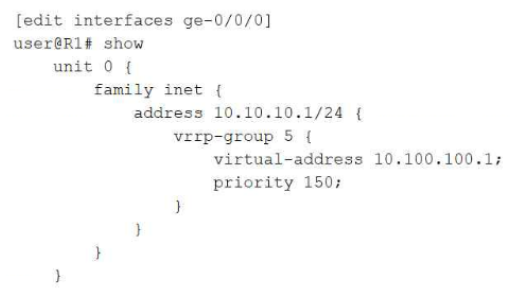
R1 is not responding to ICMP requests sent to the VIP address.
Referring to the exhibit, which command option would you configure on the virtual address to correct this problem?
In this configuration, R1's physical interface address (10.10.10.1) is different from the VRRP virtual IP address (10.100.100.1), meaning R1 is operating as a non-owner VRRP master --- it did not originate the virtual address as one of its own real interface addresses. By default, Junos VRRP masters that do not own the virtual address will forward transit traffic destined through that address but will not process or respond to traffic addressed directly to the VIP itself, such as ICMP echo requests, Telnet, or SSH sessions aimed at 10.100.100.1. This is deliberate default behavior intended to prevent ambiguity about which physical device is answering on behalf of a shared virtual identity. To allow the master to accept and respond to packets whose destination is the virtual address itself, the accept-data statement must be explicitly configured under the vrrp-group hierarchy. Once enabled, the elected master will process locally destined traffic sent to the VIP, resolving exactly the symptom described. The track option is used for interface or route-based priority adjustment to influence mastership, advertise-interval tunes the frequency of VRRP hello advertisements, and no-preempt prevents a higher-priority router from reclaiming mastership once a lower-priority router has taken over --- none of these affect whether the master processes traffic destined to the VIP. Reference topics: Junos Enterprise Routing -- High Availability, VRRP accept-data Behavior.
Nguyet
3 days agoDenna
8 days agoJosephine
13 days agoMisty
18 days agoMari
23 days agoAhmed
29 days agoAshlyn
1 month agoBrinda
1 month agoFranchesca
1 month ago