
Free Preparation Discussions
 MENU
MENU
Versa Networks VNX301 Exam - Topic 1 Question 4 Discussion
Topic #: 1
Examine the exhibit below.
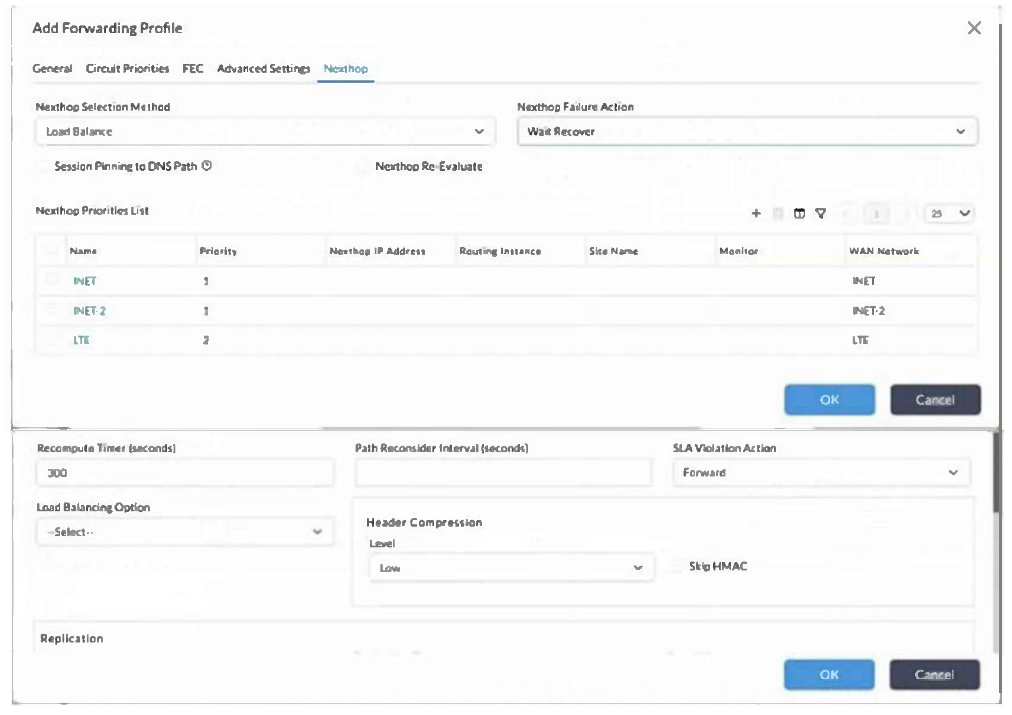
The correct answers are B and D. In the exhibit, the Next-Hop Selection Method is configured as Load Balance, and both INET and INET-2 have the same next-hop priority value of 1. Versa SD-WAN guidance states that load balancing between WAN paths is achieved by configuring at least two circuits with equal priority. Therefore, when both INET and INET-2 satisfy the SLA requirements, sessions can be load-balanced across those two internet circuits.
Option D is also correct because the exhibit shows SLA Violation Action: Forward. This means that if no next hop is SLA-compliant, the VOS device is still allowed to forward traffic instead of dropping it. This behavior is consistent with Versa SD-WAN traffic-steering concepts, where forwarding profiles define circuit or path priorities, connection methods, load-balancing behavior, and SLA handling for traffic that matches an SD-WAN policy.
Option A is incorrect because the exhibit does not use the Automatic next-hop selection method. Versa's performance-based SaaS optimization uses monitoring metrics to select the best path when configured for automatic/performance-based selection, but this exhibit shows Load Balance instead. Option C is not the best answer because LTE has lower priority 2 and would be considered only after the higher-priority INET and INET-2 paths are unavailable or unusable, not merely when one INET circuit fails.
Michell
3 days agoTheodora
8 days agoSage
13 days agoDelbert
18 days agoWeldon
24 days agoMadalyn
29 days agoPrecious
1 month agoGlenn
1 month agoChau
1 month agoWava
2 months agoMartin
2 months agoRosalind
2 months agoBrandon
4 months ago