
Free Preparation Discussions
 MENU
MENU
PMI CAPM Exam Questions
- Topic 1: Project Management Fundamentals and Core Concepts: This domain covers the distinction between projects, programs, portfolios, and operations. Candidates such as Project Managers must understand project life cycles, differentiate between predictive and adaptive methodologies, identify risks and constraints, critique project scope, apply ethics, and recognize how projects drive change. They also focus on managing costs, quality, risks, schedules, and resources.
- Topic 2: Predictive, Plan-Based Methodologies: Candidates such as Project Administrators are tested. The skill covers identifying organizational structures suitable for predictive methodologies, determining activities within processes, and applying critical path methods and work breakdown structures (WBS) for schedule management.
- Topic 3: Agile Frameworks/Methodologies: This domain evaluates candidates' understanding of agile methodologies by comparing adaptive and predictive projects. Candidates learn to recognize supportive organizational structures and plan iterations effectively.
- Topic 4: Business Analysis Frameworks: Project Analysts are tested in this domain and skills cover their focus on stakeholder dynamics, differentiating stakeholder roles, and identifying effective communication methods. They also gather requirements using tools like user stories or use cases.
Free PMI CAPM Exam Actual Questions
Note: Premium Questions for CAPM were last updated On Aug. 30, 2026 (see below)
Which three processes are generally included in risk management? (Choose three)
In the PMBOK Guide, Project Risk Management includes the processes required to conduct risk management planning, identification, analysis, response planning, response implementation, and monitoring on a project.
Why Choice B is correct (Identify Risks): This is the process of determining which risks may affect the project and documenting their characteristics. It is an iterative process because new risks may evolve or become known as the project progresses through its life cycle.
Why Choice D is correct (Perform Qualitative Risk Analysis): Once risks are identified, they must be prioritized. This process assesses the probability and impact of each risk to determine which ones require the most attention. It typically uses a Probability and Impact Matrix to rank risks as high, medium, or low.
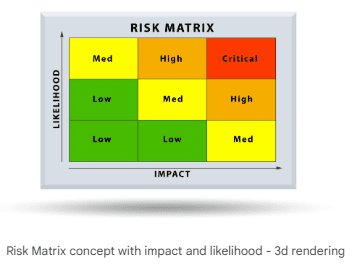
Why Choice C is correct (Plan Risk Responses): After prioritizing risks, the team develops options and actions to enhance opportunities and reduce threats. Common strategies for threats include Avoid, Transfer, Mitigate, or Accept, while strategies for opportunities include Exploit, Share, Enhance, or Accept.
Analysis of other options:
A (Monitor Risk Costs): While costs are monitored in the Control Costs process, there is no specific process named 'Monitor Risk Costs' in the Risk Management knowledge area. The correct process for oversight is Monitor Risks, which tracks the status of risks and the effectiveness of responses.
E (Estimate Risk Activity Resources): This is not a standard process. Resource estimation occurs in Project Resource Management (Estimate Activity Resources). While risk responses require resources, the estimation of those resources is integrated into the broader resource and schedule management plans, not as a standalone risk process.
Key Concept: The Project Management Institute (PMI) emphasizes that Risk Management is proactive. By Identifying Risks (Choice B), Analyzing them Qualitatively (Choice D), and Planning Responses (Choice C), a project manager reduces the likelihood of 'firefighting' and increases the probability of project success by preparing for uncertainty before it occurs.
An input to the Plan Cost Management process is:
According to the PMBOK Guide, the Plan Cost Management process is the process of defining how the project costs will be estimated, budgeted, managed, monitored, and controlled. This process occurs early in the Planning Process Group.
The Project Charter: This is a critical input to the Plan Cost Management process. The project charter provides the high-level project description and boundaries from which the detailed costs are derived. Crucially, it contains the preapproved financial resources (the high-level budget) from which the detailed cost management plan must be developed. It also defines the project approval requirements that will influence how costs are managed.
Other Inputs: Along with the Project Charter, other inputs include the Project Management Plan (specifically the schedule and risk management plans), Enterprise Environmental Factors, and Organizational Process Assets.
Why the other options are incorrect:
A . Cost estimates: These are an output of the Estimate Costs process. You cannot have detailed cost estimates before you have created the Plan Cost Management document, which defines how to create those estimates.
B . Resource calendars: These are an input to the Estimate Activity Durations and Estimate Costs processes. They show when and for how long identified project resources will be available. While they influence the total cost, they are not used to establish the high-level policy of 'how' to manage costs.
D . The risk register: The risk register is an input to Estimate Costs and Determine Budget, as risks (threats and opportunities) have financial impacts that require contingency reserves. However, it is not a standard input to the initial Plan Cost Management process, which focuses on the methodology rather than specific risk events.
Organizational planning impacts projects by means of project prioritization based on risk, funding, and an organizations:
According to the PMBOK Guide, specifically within the sections on Project Management and Strategy, projects are the primary means by which an organization achieves its strategic goals. Organizational planning dictates how projects are selected and prioritized.
Strategic Alignment: Projects are typically authorized as a result of one or more strategic considerations. The Strategic Plan serves as the highest-level roadmap for the organization, and any potential project must be evaluated against how well it aligns with these long-term goals.
Prioritization Factors: When an organization conducts its planning, it looks at several variables to decide which projects to fund and initiate:
Risk: The potential for negative impacts or failure.
Funding: The availability of capital and expected Return on Investment (ROI).
Strategic Goals: Market demand, technological advance, legal requirements, or social need as defined in the Strategic Plan.
Portfolio Management: This is the level where organizational planning most directly impacts projects. Portfolio managers use the Strategic Plan to ensure that the 'right' work is being done to move the company toward its vision.
Analysis of other choices:
Choice A (Budget plan): While funding is a constraint mentioned in the question, the 'Budget Plan' is usually a subset of the broader strategic and operational plans. It tells you if you can afford a project, but the Strategic Plan tells you why you should do it.
Choice B (Resource plan): Resource planning (human and physical) is a critical operational component, but prioritization is driven by the value the project brings to the organization's strategy, not just the availability of staff.
Choice C (Scope plan): Scope planning is project-specific. It defines what the project will do once it has already been selected. It does not drive the organizational-level prioritization process.
The project leam is brainstorming on approaches to deliver the upcoming product launch for which the project has been chartered. The project manager is laying out hybrid, adaptive, iterative methods. What is the team trying to address?
According to the PMBOK Guide, the choice between hybrid, adaptive (agile), iterative, and predictive (waterfall) methods refers to the Project Life Cycle. A life cycle is the series of phases that a project passes through from its start to its completion. It provides the basic framework for managing the project.
When a project manager is evaluating these specific methods, they are determining the Development Life Cycle best suited for the product, service, or result:
Predictive (Waterfall): Scope, time, and cost are determined in the early phases of the life cycle.
Iterative: Scope is generally determined early, but time and cost estimates are routinely modified as the team's understanding of the product increases.
Adaptive (Agile): Change-driven or agile; the detailed scope is defined and approved before the start of an iteration.
Hybrid: A combination of a predictive and an adaptive life cycle.
Why Option B is correct: The terms 'hybrid,' 'adaptive,' and 'iterative' are the standard classifications used to describe the nature and cadence of the project's life cycle. Selecting the correct life cycle ensures the project management approach aligns with the complexity and uncertainty of the project's requirements.
Analysis of Distractors:
A (Co-location): This refers to the physical placement of team members (working in the same room or office) to improve communication. It is a resource management technique, not a delivery methodology.
C (Diversity): This usually refers to the composition of the project team or stakeholder group regarding different backgrounds and perspectives. While important for team performance, it does not describe delivery methods.
D (Management): While the project manager 'manages' the project, this term is too broad. The specific technical term for the structure of delivery (hybrid/adaptive) is the 'Life-cycle.'
Given the following information, what is the schedule variance (SV) for this project?
Early start date (ES): 16 weeks
Actual time: 12 weeks
Schedule performance index (SPI): 1.3
This question utilizes the Earned Schedule (ES) method, which is an extension of the traditional Earned Value Management (EVM) framework. While traditional EVM measures schedule variance in currency (dollars/units), Earned Schedule measures it in units of time.
According to the PMI Practice Standard for Earned Value Management and references in the PMBOK Guide:
Identify the Variables:
Earned Schedule (ES): 16 weeks. (Note: In this specific calculation context, 'ES' refers to Earned Schedule---the duration that should have been taken to achieve the current earned value---rather than 'Early Start').
Actual Time (AT): 12 weeks.
Schedule Performance Index (SPI): 1.3 (given).
Formula for Schedule Variance (Time):
The formula for Schedule Variance in terms of time ($SV_t$) is:
$$SV_t = ES - AT$$
Substituting the given values:
$$SV_t = 16 - 12 = 4$$
Validation with SPI:
The formula for the Schedule Performance Index in terms of time ($SPI_t$) is:
$$SPI_t = ES / AT$$
Substituting the values:
$$SPI_t = 16 / 12 = 1.33...$$
This matches the provided SPI of 1.3 (rounded to one decimal place), confirming that the interpretation of the variables is correct.
Conclusion:
A positive Schedule Variance of 4 indicates that the project is 4 weeks ahead of schedule. This is consistent with an SPI greater than 1.0 (1.3), which denotes efficient schedule performance.
- Select Question Types you want
- Set your Desired Pass Percentage
- Allocate Time (Hours : Minutes)
- Create Multiple Practice tests with Limited Questions
- Customer Support
Imran Khan
19 days agoChristopher Walker
27 days agoSunita Bansal
2 months agoJustin Peterson
2 months agoLayla Nawaz
3 months agoEmily Martinez
3 months agoDennis Thomas
4 months agoJennifer Robinson
4 months agoStephen Hill
4 months agoLinda Scott
4 months agoRichard Lewis
4 months agoRebecca Miller
4 months agoNancy Reed
4 months agoGeorgiana
5 months agoErasmo
5 months agoToshia
6 months agoTaryn
6 months agoNovella
6 months agoLouvenia
6 months agoCharlie
7 months agoCamellia
7 months agoNathan
7 months agoIsreal
7 months agoTasia
8 months agoPatrick
8 months agoRosann
8 months agoKati
8 months agoAlyce
9 months agoLajuana
9 months agoBeula
9 months agoVeronica
9 months agoPaulene
10 months agoReid
10 months agoJustine
10 months agoTien
10 months agoDomonique
11 months agoRanee
11 months agoMozelle
11 months agoMindy
11 months agoRusty
12 months agoTrina
1 year agoShawnta
1 year agoEmily
1 year agoElmer
1 year agoWilliam
1 year agoMonroe
1 year agoSherrell
1 year agoKatlyn
1 year agoDorathy
1 year agoWillis
1 year agoJolanda
1 year agoElvera
2 years agoIluminada
2 years agoDorthy
2 years agoJanessa
2 years agoCheryll
2 years agoLai
2 years agoOneida
2 years agoValentin
2 years agoKathryn
2 years agoElke
2 years agoZona
2 years agoLajuana
2 years agoNoble
2 years agoTheola
2 years agoLizbeth
2 years agoLewis
2 years agoLayla
2 years agoChan
2 years agoLeonardo
2 years agoKrystina
2 years agoJerry
2 years agoLatricia
2 years agoAntonio
2 years agoBrock
2 years agoJenise
2 years agoYun
2 years agoKati
2 years agoOlene
2 years agoLenna
2 years agoThora
2 years agoKarina
2 years agoStaci
2 years ago