
Free Preparation Discussions
 MENU
MENU
Juniper JN0-481 Exam - Topic 4 Question 16 Discussion
Topic #: 4
You are using Juniper Apstra to create logical devices and interface maps. You use them in three different rack types. You then modify the logical devices to support the required increased interface speeds and receive an error message when updating the logical devices.
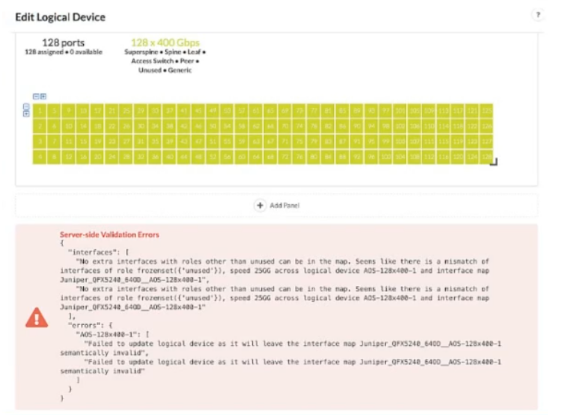
Referring to the exhibit, which action is needed to remove the error?
In Apstra 5.1, a logical device defines the abstract port layout and capabilities (including supported speeds), while an interface map binds that abstract port layout to the real, vendor-specific front-panel ports. Rack types then consume logical devices and interface maps to model the rack's leaf/superspine roles. Once a logical device is referenced by interface maps and used inside rack types (and potentially templates that instantiate those rack types), Apstra treats the combination as a consistent contract: port counts, roles, and speeds must remain semantically valid for every object that depends on it.
The exhibit's validation error indicates that after changing interface speeds on the logical device, the existing interface map(s) and their usage in rack types no longer match the logical device definition (for example, the map expects certain ports/speeds/roles, but the updated logical device would leave the map invalid). Because the logical device is being consumed in multiple places, the safest and required way to remove the error is to remove all dependencies---templates (if they reference the rack types), rack types, and interface maps---so Apstra can accept the new logical device definition without violating existing mappings. After updating the logical device, you then recreate or update the interface maps and re-associate them with the rack types/templates so the entire chain remains consistent under the new speed requirements.
Currently there are no comments in this discussion, be the first to comment!