
 MENU

-- Exhibit --
-- Exhibit --
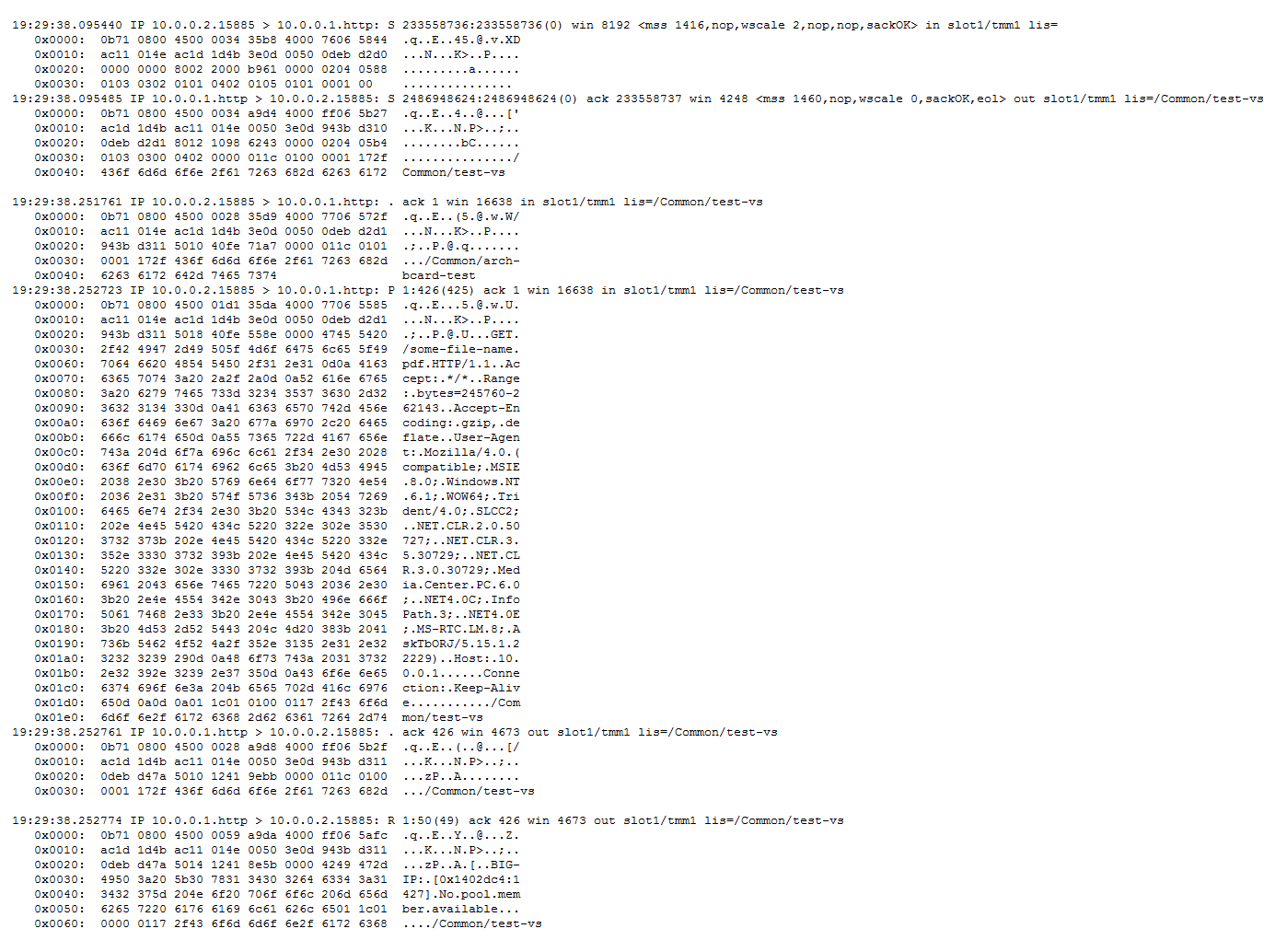
Refer to the exhibit.
A user is unable to access an HTTP application via a virtual server.
What is the cause of the failure?
Suggested Answer: D
Get Premium 301b Questions
as Interactive Web-Based Practice Test or PDF
Real Exam Format
Detailed Explanations
Instant Access
Get Your Practice Test
12 comments · newest first
DO
Dominga
11 months ago
Isn't it possible there's just no pool member available?
RI
Rikki
11 months ago
No way it's the Keep-Alive header causing this.
EL
Elbert
11 months ago
Surprised that people overlook the host header requirement.
WI
Wilburn
12 months ago
I think it's definitely option B!
MA
Mabelle
12 months ago
The virtual server being disabled is a common issue.
UL
Ulysses
12 months ago
I feel like the Keep-Alive header wouldn't typically block access, but I could be wrong. It’s tricky to remember all the details!
LA
Laurel
1 year ago
The pool member availability seems crucial. If there's no member to handle the request, that could definitely cause access issues.
SH
Shasta
1 year ago
I think I came across a similar question where the host header was mentioned. It could be a possibility, but I’m not confident.
CA
Carline
1 year ago
I remember studying about virtual servers, but I'm not entirely sure if the disabled state could be the issue here.
DA
Danica
1 year ago
Gotta be objectives. That's where you'd outline the specific metrics, milestones, and timelines for the organization's plan. The other choices like mission and vision are more broad and conceptual.
OL
Ollie
1 year ago
This seems straightforward, but I want to make sure I'm not missing any nuances. I'll go through the options systematically and see if I can identify the correct reason.
LU
Luisa
1 year ago
This seems like a straightforward question. The key requirements are supporting SQL experts, storing CSV and JSON files, and querying semi-structured data, all with a focus on simplicity, speed, cost, and flexibility. I think option A, Amazon S3 and Amazon Athena, is the best fit.