
Deal of The Day! Hurry Up, Grab the Special Discount - Save 25% - Ends In 00:00:00 Coupon code: SAVE25
Welcome to Pass4Success

- Free Preparation Discussions

Eccouncil 312-50 Exam - Topic 16 Question 112 Discussion

Actual exam question for Eccouncil's 312-50 exam
Question #: 112
Topic #: 16
[All 312-50 Questions]

Suppose your company has just passed a security risk assessment exercise. The results display that the risk of the breach in the main company application is 50%. Security staff has taken some measures and

implemented the necessary controls. After that, another security risk assessment was performed showing that risk has decreased to 10%. The risk threshold for the application is 20%. Which of the following risk decisions will be the best for the project in terms of its successful continuation with the most business profit?

Show Suggested Answer Hide Answer
Suggested Answer: A

Risk Mitigation

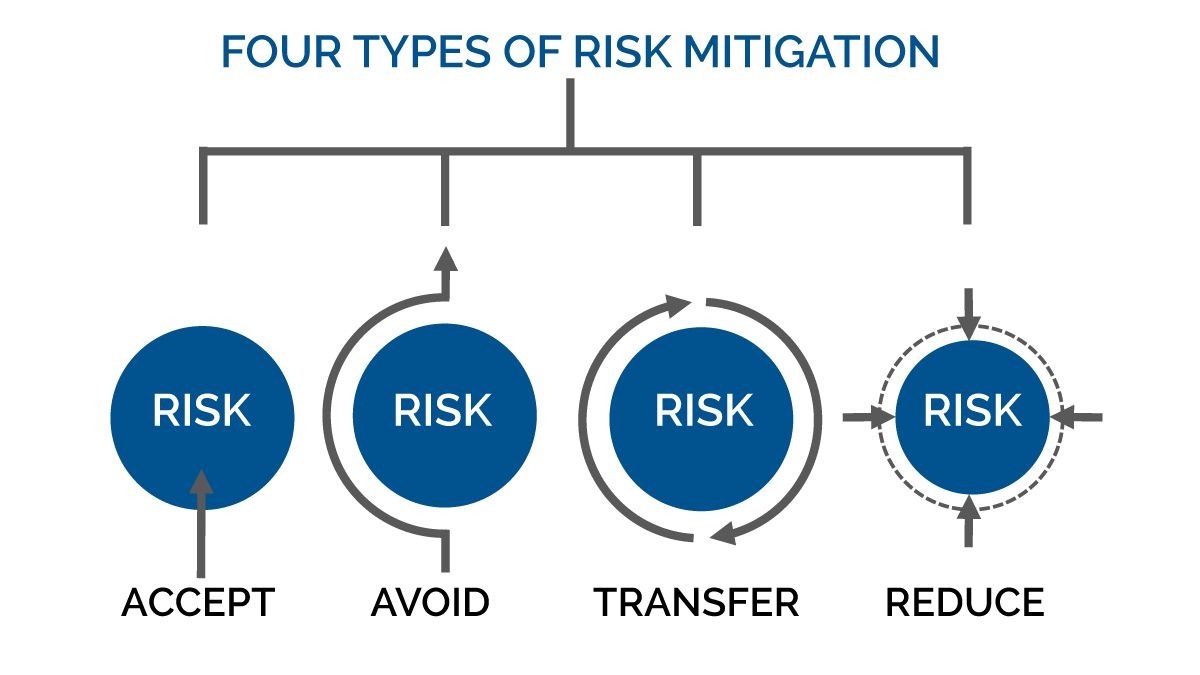
Risk mitigation can be defined as taking steps to reduce adverse effects. There are four types of risk mitigation strategies that hold unique to Business Continuity and Disaster Recovery. When mitigating risk, it's important to develop a strategy that closely relates to and matches your company's profile.
Risk Acceptance

Risk acceptance does not reduce any effects; however, it is still considered a strategy. This strategy is a common option when the cost of other risk management options such as avoidance or limitation may outweigh the cost of the risk itself. A company that doesn't want to spend a lot of money on avoiding risks that do not have a high possibility of occurring will use the risk acceptance strategy.

Risk Avoidance

Risk avoidance is the opposite of risk acceptance. It is the action that avoids any exposure to the risk whatsoever. It's important to note that risk avoidance is usually the most expensive of all risk mitigation options.

Risk Limitation

Risk limitation is the most common risk management strategy used by businesses. This strategy limits a company's exposure by taking some action. It is a strategy employing a bit of risk acceptance and a bit of risk avoidance or an average of both. An example of risk limitation would be a company accepting that a disk drive may fail and avoiding a long period of failure by having backups.

Risk Transference

Risk transference is the involvement of handing risk off to a willing third party. For example, numerous companies outsource certain operations such as customer service, payroll services, etc. This can be beneficial for a company if a transferred risk is not a core competency of that company. It can also be used so a company can focus more on its core competencies.


Contribute your Thoughts:

0/2000 characters
Tennie
4 days ago
I think we should accept the risk. 10% is manageable.
upvoted 0 times
...
Yan
9 days ago
Wait, how did they drop it so much? Sounds too good to be true!
upvoted 0 times
...
Ettie
14 days ago
Why not just accept it? 10% isn't that bad.
upvoted 0 times
...
Pedro
1 month ago
I say go for option C, mitigate the risk further!
upvoted 0 times
...
Michal
1 month ago
Risk went from 50% to 10%, that's impressive!
upvoted 0 times
...
Lizbeth
1 month ago
C) Mitigate the risk is the way to go. Gotta love those security assessments - always keeping us on our toes!
upvoted 0 times
...
Coral
2 months ago
C) Mitigate the risk is the obvious answer. Avoiding the risk altogether would be too drastic, and 0% risk is probably not feasible.
upvoted 0 times
...
Flo
2 months ago
Haha, I bet the security team is patting themselves on the back for that 40% risk reduction. C) Mitigate the risk is the smart choice.
upvoted 0 times
...
Ling
2 months ago
I agree, C) Mitigate the risk is the way to go. Bringing the risk down to 0% would be overkill and likely too expensive.
upvoted 0 times
...
Goldie
2 months ago
I feel like avoiding the risk completely isn’t practical since the risk is already low. Accepting it could be the best way to keep the project moving forward.
upvoted 0 times
...
France
2 months ago
This reminds me of a practice question where we had to decide between mitigating and accepting risk. I think mitigating might be too much effort here.
upvoted 0 times
...
Vanna
2 months ago
I’m not entirely sure, but I think introducing more controls might be overkill since the risk is already low.
upvoted 0 times
...
Adelle
3 months ago
Ah, I see. The key here is to find the right balance between risk and business profit. Accepting the risk might be the best option, but I'll need to analyze the details more closely.
upvoted 0 times
...
William
3 months ago
Avoiding the risk completely might be too extreme, especially since the measures taken have already reduced it significantly. I think the best approach is to carefully consider the options and choose the one that balances risk and business profit.
upvoted 0 times
...
Wei
3 months ago
I'm a bit confused here. If the risk is still above the threshold, shouldn't we be looking at mitigating it further? I'll need to review the question again.
upvoted 0 times
...
Bette
3 months ago
I remember we discussed risk thresholds in class, and since the current risk is below the threshold, maybe accepting the risk could be a valid option?
upvoted 0 times
...
Earlean
3 months ago
C) Mitigate the risk seems like the best option here. 10% risk is still lower than the 20% threshold, so the project can continue with some additional controls.
upvoted 0 times
...
Marshall
4 months ago
But 10% is still above the threshold...
upvoted 0 times
...
Wenona
4 months ago
Okay, let's see. The risk has decreased from 50% to 10%, which is below the 20% threshold. I'm leaning towards accepting the risk, but I'll need to double-check the details.
upvoted 0 times
...
Emile
4 months ago
Hmm, this is a tricky one. I'll need to carefully weigh the options and consider the risk threshold and business impact.
upvoted 0 times
Cordelia
4 months ago
I think mitigating the risk is the best option.
upvoted 0 times
...
Jolanda
4 months ago
Agreed, we should keep it under the threshold.
upvoted 0 times
...
...

Save Cancel