Deal of The Day! Hurry Up, Grab the Special Discount - Save 25% - Ends In 00:00:00 Coupon code: SAVE25
Welcome to Pass4Success

- Free Preparation Discussions

CFA Institute CFA-Level-II Exam - Topic 1 Question 121 Discussion

Jerry Sanders, CFA, has been asked to analyze the 20-year bonds of Marietta Tech, Inc., which are currently being held in a corporate bond portfolio managed by a colleague, and to recommend whether the bonds should be sold or held. The bonds currently have a yield spread of 1.55% over Treasuries.Marietta Tech, Inc. designs, manufactures, and markets specialty trucks and truck bodies mounted on new truck chassis produced by others, including concrete mixers, refuse bodies, fire and emergency vehicles, defense trucks, cut-away and dry freight van bodies, refrigerated units, stake bodies, and other specialized trucks. Marietta also manufactures fiberglass wind deflectors, armored trucks, shuttle buses, and cargo vans. Marietta's customers are located in the United States and Canada.Exhibit 1: Selected Financial Data for Marietta Tech, Inc. (in thousands of $)At lunch Sanders discusses the credit analysis of various types of bonds with Elizabeth Yan, who was just hired as a bond analyst. Yan makes the following statements:Statement 1: An analysis of the issuer's business and operating risks is important to the analysis of corporate bond credit risk but not important for the credit analysis of asset backed securities (ABS).Statement 2: The unique bond covenants in a municipal bond's trust indenture require an additional level of credit analysis not necessary in a corporate credit analysis.After lunch Sanders asks Tatiana Petrovich in the municipal bond department for her opinion on the most important factors in the risk assessment of tax-backed municipal debt. Petrovich identifies three factors:1. Ameasure of debt burden, such as debt-per-capita in the tax jurisdiction.2. An evaluation of tax collection rates and intergovernmental revenue ability.3. Analysis of the municipality's budgetary policies as an indication of financial discipline.Compare the 2008 free CFO-to-long-term obligations ratio benchmarks to Marietta's ratio. Marietta is between the:
B) BBB and BB benchmark ratios.
A) A and BBB benchmark ratios.
C) BB and B benchmark ratios.

CFA Institute CFA-Level-II Exam - Topic 1 Question 121 Discussion

Actual exam question for CFA Institute's CFA-Level-II exam
Question #: 121
Topic #: 1
[All CFA-Level-II Questions]

Jerry Sanders, CFA, has been asked to analyze the 20-year bonds of Marietta Tech, Inc., which are currently being held in a corporate bond portfolio managed by a colleague, and to recommend whether the bonds should be sold or held. The bonds currently have a yield spread of 1.55% over Treasuries.

Marietta Tech, Inc. designs, manufactures, and markets specialty trucks and truck bodies mounted on new truck chassis produced by others, including concrete mixers, refuse bodies, fire and emergency vehicles, defense trucks, cut-away and dry freight van bodies, refrigerated units, stake bodies, and other specialized trucks. Marietta also manufactures fiberglass wind deflectors, armored trucks, shuttle buses, and cargo vans. Marietta's customers are located in the United States and Canada.

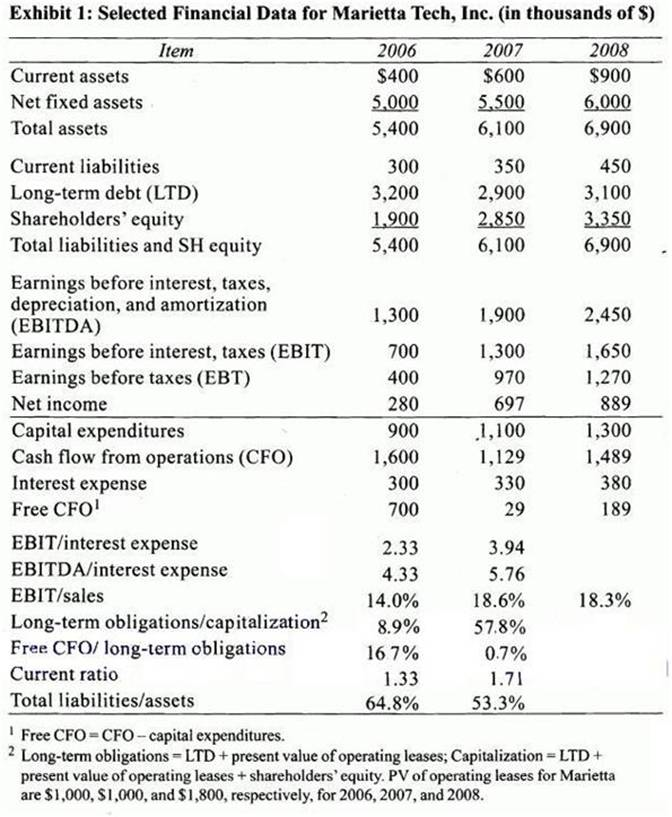
Exhibit 1: Selected Financial Data for Marietta Tech, Inc. (in thousands of $)
At lunch Sanders discusses the credit analysis of various types of bonds with Elizabeth Yan, who was just hired as a bond analyst. Yan makes the following statements:

Statement 1: An analysis of the issuer's business and operating risks is important to the analysis of corporate bond credit risk but not important for the credit analysis of asset backed securities (ABS).

Statement 2: The unique bond covenants in a municipal bond's trust indenture require an additional level of credit analysis not necessary in a corporate credit analysis.

After lunch Sanders asks Tatiana Petrovich in the municipal bond department for her opinion on the most important factors in the risk assessment of tax-backed municipal debt. Petrovich identifies three factors:

1. Ameasure of debt burden, such as debt-per-capita in the tax jurisdiction.

2. An evaluation of tax collection rates and intergovernmental revenue ability.

3. Analysis of the municipality's budgetary policies as an indication of financial discipline.

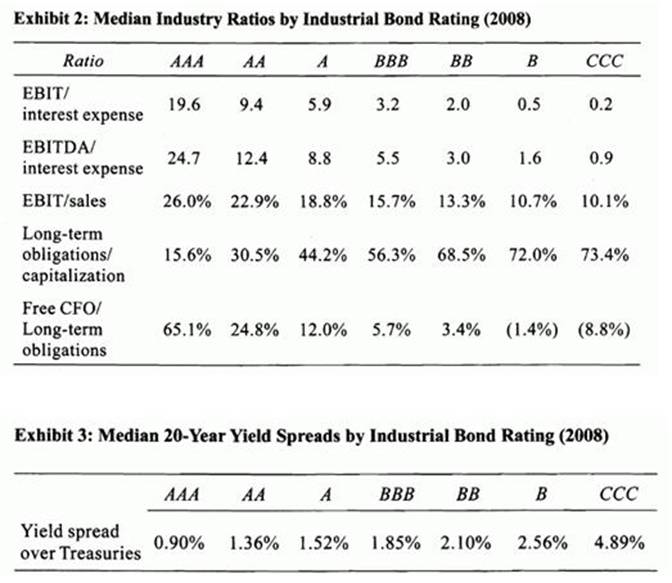
Compare the 2008 free CFO-to-long-term obligations ratio benchmarks to Marietta's ratio. Marietta is between the:

Show Suggested Answer Hide Answer
Suggested Answer: B

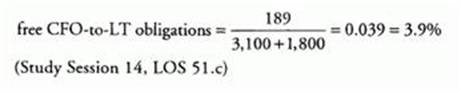
Marietta's free CFO-to-LT obligations ratio of 3.9% is between the BBB median (5.7%) and the BB median (3.4%).

Contribute your Thoughts:

0/2000 characters
Hildred
2 days ago
I feel like I need to double-check the benchmarks for the CFO-to-long-term obligations ratio. I think Marietta is closer to the BBB and BB range, but I’m not completely confident.
upvoted 0 times
...
Reita
7 days ago
I think I saw a practice question that discussed the unique covenants in municipal bonds. It seems like they really do require a different level of analysis compared to corporate bonds.
upvoted 0 times
...
Lauran
12 days ago
I remember studying the importance of analyzing business and operating risks for corporate bonds, but I'm not sure how that applies to ABS. Did we cover that in class?
upvoted 0 times
...

Save Cancel