
 MENU
MENU
In 1990, Teller Co. incurred losses arising from its guilty plea in its first antitrust action, and from a substantial increase in production costs caused when a major supplier's workers went on strike. Which of these losses should be reported as an extraordinary item?
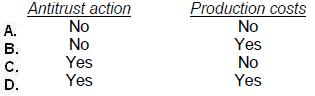
Suggested Answer: C
Get Premium CPA-Financial Questions
as Interactive Web-Based Practice Test or PDF
Real Exam Format
Detailed Explanations
Instant Access
Get Your Practice Test
Choice 'c' is correct. Yes - No.
Rule: Losses arising from a company's first (and probably 'last') 'anti-trust' action are unusual and extraordinary and should be reported as an extraordinary item. Losses resulting from additional costs caused by a strike at a major supplier or even at one's own company are not extraordinary and should be disclosed as a separate component of 'income from continuing operations.'
8 comments · newest first
AD
Adelina
11 months ago
So, is this really how extraordinary items are defined?
TI
Timmy
12 months ago
I think both should be reported, but the antitrust one stands out.
CA
Catarina
12 months ago
Wait, are we really calling a strike cost extraordinary?
MA
Martha
12 months ago
I disagree, the strike costs seem more regular.
MA
Maryrose
1 year ago
The antitrust losses are definitely extraordinary.
BE
Bernardine
1 year ago
I'm a bit confused by the wording of these options. I'll need to re-read them a few times to make sure I understand the nuances.
ST
Stefania
1 year ago
Ah, I got it! The answer must be "records", since that's the way to access the data in a FlexCard. Nice!
DO
Dominga
1 year ago
I remember calculating carrying costs in my practice questions, but I'm not entirely sure if I'm applying the variable cost ratio correctly here.