Free Preparation Discussions
 MENU
MENU
Free VEEAM VMCE_v12 Exam Dumps October 2026
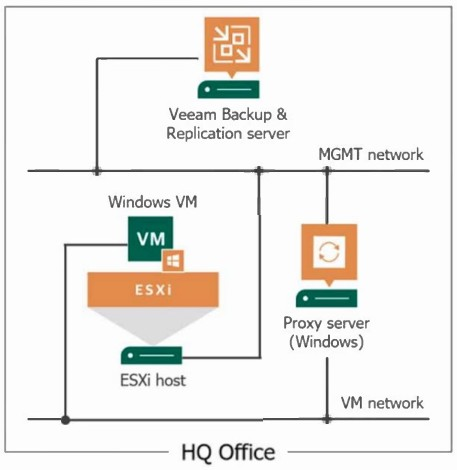
Here you can find all the free questions related with VEEAM Certified Engineer v12 (VMCE_v12) exam. You can also find on this page links to recently updated premium files with which you can practice for actual VEEAM Certified Engineer v12 Exam. These premium versions are provided as VMCE_v12 exam practice tests, both as desktop software and browser based application, you can use whatever suits your style. Feel free to try the Veeam Certified Engineer v12 Exam premium files for free, Good luck with your VEEAM Certified Engineer v12 Exam.A backup administrator must enable guest file system indexing for a backup job of a Microsoft Windows file server VM. All required credentials are added to the Veeam Backup & Replication server. VMware Tools (VIX) cannot be used due to security regulations. What should be done to make it possible in the following environment?
MultipleChoice
A customer wants to set up a Scale-Out Backup Repository. Due to malware concerns, immutability is recommended. An on-premises server can be used to hold primary backups, but it can only hold about 21 days of backups. A copy of the backups should be stored in AWS. The retention for all backups is 60 days.
Which configuration of a Scale-out Backup repository meets these requirements?
OptionsMultipleChoice
An engineer is using Veeam Backup and Replication v12.
The only backup repository is a Microsoft Windows server with direct attached Fibre Channel storage array.
The engineer realizes that none of their backups are immutable. A second copy of the backup on a different site and a different media is required.
Which option should be used to provide immutable backups on a secondary site with a different media?
OptionsMultipleChoice
What does Veeam's Secure Restore functionality ensure during restores?
OptionsMultipleChoice
Backup jobs are configured to local repositories. Backups must be sent from Site B to the repository on Site
OptionsMultipleChoice
A business has several remote sites that are backed up to the central Veeam infrastructure. After a few months, the amount of data has grown and backup copy jobs do not fit into the backup window. The current bandwidth is 20 Mbps. Management wants to avoid any additional investments.
Which option would improve backup duration?
OptionsMultipleChoice
An engineer needs to back up the data on a NAS file share, located on the company's main production site.
Which option would increase the performance of the job?
OptionsMultipleChoice
What is the primary benefit of configuring replica mapping?
OptionsMultipleChoice
Why is it recommended to have at least one backup proxy server in each site when defining a replica job?
Options