
Free Preparation Discussions
 MENU
MENU
ServSafe Manager Exam Questions
- Topic 1: PROVIDING SAFE FOOD: This chapter introduces foodborne illnesses, their causes and transmission, and establishes the foundational principles for maintaining food safety throughout operations.
- Topic 2: FORMS OF CONTAMINATION: This chapter covers biological, chemical, and physical contaminants, plus deliberate contamination, outbreak response, and food allergen management.
- Topic 3: THE SAFE FOOD HANDLER: This chapter addresses how food handlers contaminate food and outlines personal hygiene programs to prevent contamination during handling.
- Topic 4: THE FLOW OF FOOD: AN INTRODUCTION: This chapter introduces hazards throughout food's journey and establishes monitoring techniques for time and temperature control.
- Topic 5: THE FLOW OF FOOD: PURCHASING AND RECEIVING: This chapter covers supplier selection, receiving procedures, and proper storage methods including temperature requirements and organization.
- Topic 6: THE FLOW OF FOOD: PREPARATION: This chapter addresses safe preparation techniques, proper cooking requirements, and critical procedures for cooling and reheating food.
- Topic 7: THE FLOW OF FOOD: SERVICE: This chapter covers safe holding and serving practices, including time and temperature controls to prevent contamination during service.
- Topic 8: FOOD SAFETY MANAGEMENT SYSTEMS: This chapter introduces systematic approaches like HACCP for identifying hazards, establishing controls, and implementing corrective actions.
- Topic 9: SAFE FACILITIES AND PEST MANAGEMENT: This chapter covers facility requirements for safe operations, emergency preparedness, and comprehensive pest prevention and control programs.
- Topic 10: CLEANING AND SANITIZING: This chapter explains cleaning versus sanitizing procedures, dishwashing methods, and establishing effective schedules throughout the operation.
Free ServSafe ServSafe Manager Exam Actual Questions
Note: Premium Questions for ServSafe Manager were last updated On Oct. 07, 2026 (see below)
Lighting fixtures in a cooler must have bulbs that are
Proper lighting is required in all areas of a food service operation to ensure that staff can clean effectively and monitor food quality. However, light bulbs are a significant physical hazard because they are made of glass. According to ServSafe and the FDA Food Code, lighting fixtures in food-prep, food-storage, and service areas---including walk-in coolers and freezers---must be plastic shielded or otherwise shatter-resistant.
The purpose of the plastic shield (Option D) or a 'shatter-resistant' coating is to contain the glass fragments if the bulb should break. Without this protection, shards of glass could fall into open food containers, onto clean utensils, or onto prep surfaces, where they are nearly impossible to detect. In a cooler, where food is often stored in open or loosely covered bins, this risk is especially high. Managers must ensure that all lighting meets these safety standards during facility inspections. Beyond the physical protection, the Food Code also specifies minimum lighting intensity for different areas: for example, 10 foot-candles (108 lux) in walk-in units and dry-storage, and 50 foot-candles (540 lux) in high-intensity food-prep areas. Ensuring that bulbs are shielded and providing adequate brightness is a dual-purpose strategy that protects the physical integrity of the food while allowing for better overall sanitation and safety monitoring.
What is one approved way to preset utensils?
In the 'Flow of Food,' the service stage involves protecting utensils from contamination before they are used by the guest. According to the ServSafe Manager curriculum and the FDA Food Code, if a table is preset with silverware, the utensils must be protected from contamination. Wrapping them in a napkin is a primary approved method because it provides a physical barrier against dust, droplets from coughs or sneezes, and accidental contact by other guests or staff.
The regulation states that if utensils are preset and not wrapped, they must be removed and replaced when a new customer is seated, regardless of whether they appear to have been used. However, if the utensils are wrapped---such as in a 'roll-up' where the napkin completely covers the items---they do not need to be swapped out if the previous guest did not use them. This is because the wrapping ensures the 'sanitary status' of the items remains intact. Other approved methods include using a dispenser that only allows the user to touch the handle of the utensil. Options such as 'presetting indoors only' (Option B) or 'removing at the end of the day' (Option C) do not provide specific protection against contamination during the hours of operation. Proper handling of utensils is a critical part of the service phase to prevent the transmission of pathogens like Staphylococcus aureus from human contact or environmental debris. Managers must ensure that staff who prepare these roll-ups wash their hands thoroughly before touching the clean silverware.
Do food handlers cutting raw vegetables need to change their gloves before removing garbage from the kitchen?
This question tests the understanding of the specific order of operations and the purpose of single-use gloves as defined by the FDA Food Code and ServSafe. Gloves are primarily intended to protect ready-to-eat food from contamination by the food handler's hands. In the scenario described, the worker is moving from a food-prep task (cutting vegetables) to a non-food task (removing garbage). Because garbage is already considered 'dirty' or 'contaminated,' there is no risk of cross-contaminating the garbage with the residue from the vegetables. Therefore, the handler does not need to change gloves before taking out the trash.
However, the critical rule is what happens after the garbage is removed. Once the employee has handled garbage, their gloves are heavily contaminated. Before returning to any food-related activity or touching clean equipment, the employee must remove the soiled gloves, wash their hands thoroughly for the required 20 seconds, and put on a fresh pair of gloves. ServSafe emphasizes that gloves must be changed when they become torn or dirty, when beginning a different task, after an interruption (like a phone call), and specifically after handling raw meat, seafood, or poultry before touching ready-to-eat food. In this specific multiple-choice logic, the focus is on whether the act of removing garbage is protected from the vegetables. Since the answer is no, the worker can proceed to the dirty task, provided they follow the rigorous handwashing and re-gloving protocol before returning to the 'Flow of Food.'
Which step is required as a part of proper handwashing?
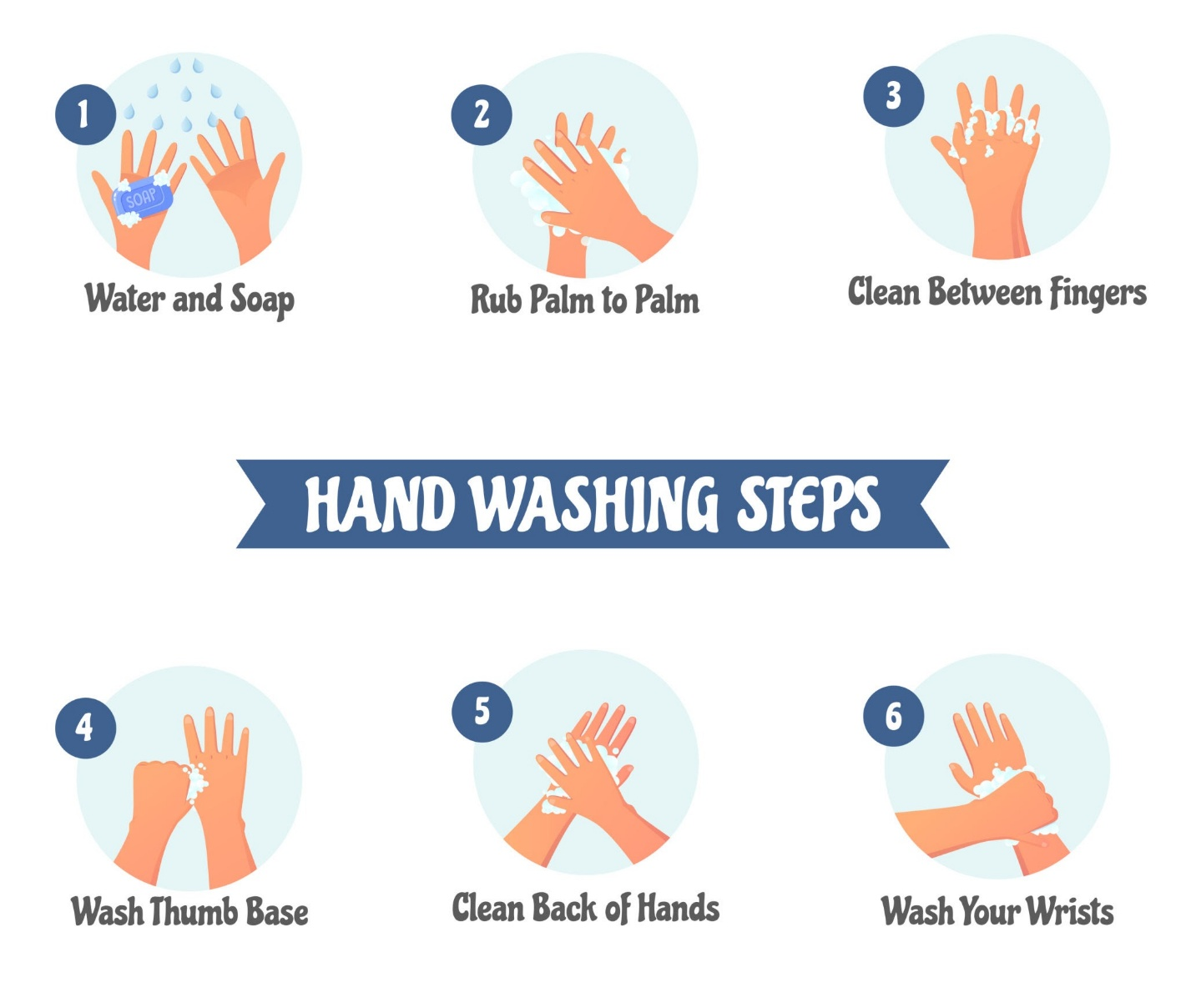
Proper handwashing is the most critical task a food handler performs to prevent the transfer of pathogens. ServSafe and the FDA Food Code outline a very specific five-step process that must take a total of at least 20 seconds. The most critical part of this process is the mechanical action of scrubbing hands and arms for 10 to 15 seconds. This vigorous scrubbing, combined with soap, creates the friction necessary to loosen and lift dirt, oils, and microorganisms (like Norovirus or Hepatitis A) from the skin and from under the fingernails.
Getty Images
The full sequence is: (1) Wet hands and arms with warm water, (2) Apply enough soap to build a good lather, (3) Scrub hands and arms vigorously for 10 to 15 seconds, (4) Rinse hands and arms thoroughly under warm running water, and (5) Dry hands and arms with a single-use paper towel or hand dryer. It is a common misconception that the entire washing process must be 20 seconds of scrubbing; the actual friction phase is 10-15 seconds. Using a nail brush (Option A) is helpful but not a mandatory requirement for every wash under the standard Food Code. Hand antiseptics (Option B) are optional and must only be used after washing, never as a replacement. Rinsing for 20 seconds (Option D) is unnecessary and wasteful. Managers must monitor handwashing stations to ensure they are stocked with soap, single-use towels, and a trash can, and they must verify that employees are not taking shortcuts during the scrubbing phase, as this is where most pathogens are physically removed from the hands.
Which is the highest air temperature at which shell eggs can be received?
Receiving temperatures are critical to ensuring that food enters the facility in a safe condition. While most TCS foods (like meat and dairy) must be received at an internal temperature of $41^{\circ}F$ ($5^{\circ}C$) or lower, the FDA Food Code provides a specific exception for shell eggs. Shell eggs may be received at an ambient air temperature of $45^{\circ}F$ ($7^{\circ}C$) or lower.
This exception exists because eggs are often packed and shipped shortly after being laid, and cooling the internal yolk to $41^{\circ}F$ immediately can be difficult in a high-volume production environment. However, once the eggs are received, they must be stored in a refrigerated unit that maintains an ambient temperature of $45^{\circ}F$ or lower to prevent the growth of Salmonella Enteritidis, which can be present inside the egg. Managers must check the temperature of the delivery truck and the air inside the egg crates upon arrival. If the air temperature exceeds $45^{\circ}F$, the shipment should be rejected. Other 'exceptions' to the $41^{\circ}F$ rule include shucked shellfish and milk (also $45^{\circ}F$), and live shellfish (air temperature $45^{\circ}F$, internal temperature no more than $50^{\circ}F$). Once received, these items must be cooled to $41^{\circ}F$ or lower within four hours. Maintaining these strict receiving standards is the first step in the 'Flow of Food' and acts as a barrier against contaminated products entering the kitchen.
- Select Question Types you want
- Set your Desired Pass Percentage
- Allocate Time (Hours : Minutes)
- Create Multiple Practice tests with Limited Questions
- Customer Support
Justin Hernandez
10 days agoJason Martinez
1 month agoHarold Scott
1 month agoAmy Hall
2 months agoDaniel Baker
2 months agoJeffrey Scott
3 months agoPaul Miller
3 months agoKimberly Moore
4 months agoMatthew Lewis
4 months agoMaria Allen
5 months agoLaura Evans
6 months agoPaul Edwards
6 months agoJennifer Bell
5 months agoMonica Flores
5 months agoBetty Jones
5 months agoRonald Flores
6 months agoPeggy
6 months agoFranchesca
7 months agoCassi
7 months agoKerrie
7 months agoShakira
7 months agoLenna
8 months agoChristiane
8 months agoJuan
8 months agoLachelle
8 months agoNoe
9 months agoGoldie
9 months agoRossana
9 months agoCarmela
9 months agoAmmie
10 months ago