
 MENU
MENU
What is the result in subarray after the following code has executed?
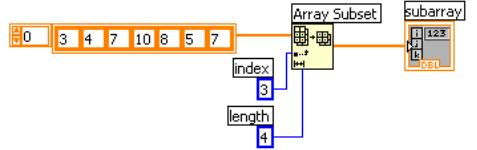
Suggested Answer: C
Get Premium CLAD Questions
as Interactive Web-Based Practice Test or PDF
Real Exam Format
Detailed Explanations
Instant Access
Get Your Practice Test
12 comments · newest first
VI
Vince
11 months ago
I agree with {10, 8, 5, 7}, it makes sense!
SO
Sommer
12 months ago
Wait, are we sure about that? Seems off to me.
BE
Beatriz
12 months ago
Definitely {10, 8, 5, 7} based on the logic!
TA
Tawanna
12 months ago
I think it should be {8, 5, 7} instead.
MA
Marguerita
1 year ago
Looks like the result is {10, 8, 5, 7}.
NA
Nan
1 year ago
I’m leaning towards B, but I’m not confident. I wish I had reviewed more examples with similar logic before the exam.
DO
Douglass
1 year ago
I remember something about how elements are shifted in a subarray, but I can't recall the exact output. Maybe it's A?
TO
Tora
1 year ago
I think the code modifies the original array, but I'm not entirely sure how the indices work in this case.
LO
Louisa
1 year ago
This reminds me of a practice question where we had to track changes in a subarray. I feel like the answer might be C, but I could be wrong.
ST
Steffanie
1 year ago
This looks like a straightforward question on fractional factorial designs. I'm pretty confident I can figure this one out.
GR
Graciela
1 year ago
Alright, let me try to think this through step-by-step. The IVR-TServer is an integrated voice response system, so it's likely involved in some kind of network communication. The ISCC function could be related to that, but I'm not sure if it's actually used by the IVR-TServer itself. I'll need to carefully consider the options.
MI
Milly
1 year ago
Okay, I've got a plan. I'll select the chart, add the data labels, and then format them to show the total for the specific product categories. Should be doable.