
Free Preparation Discussions
 MENU
MENU
iSQI CTAL-TM_Syll2012 Exam Questions
- Topic 1: Includes people in roles such as testers test analysts test engineers
- Topic 2: User acceptance testers and software developers
- Topic 3: Advanced Level qualify cation is also appropriate for anyone who wants a deeper understanding of software testing.
Free iSQI CTAL-TM_Syll2012 Exam Actual Questions
Note: Premium Questions for CTAL-TM_Syll2012 were last updated On Oct. 20, 2026 (see below)
Assume that the following test cases have been executed at the end of the first week of test execution: TC-001, TC-002 and TC-007. All these tests are 'passes'.
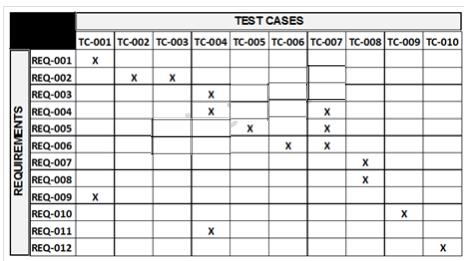
What is the MINIMUM number of the remaining test cases that must be successfully executed to fulfill the EX1 exit criteria?
K3 2 credits
The following are the exit criteria described in the test plan of a software product:
EX1. The test suite for the product must ensure that at least each quality risk item is covered by at least one test case (a quality risk item can be covered by more test cases).
EX2. All test cases in the test suite must be run during the execution phase.
EX3. Defects are classified into two categories: ''C'' (critical defect) and ''NC'' (non-critical defect).
No known C defects shall exist in the product at the end of the test execution phase.
Which of the following information is useless when the specified exit criteria is evaluated? K2 1 credit
Consider an agile team adopting Extreme Programming (XP) with five developers and one tester without any coding experience.
To which of the following activities would you expect the tester will contribute most?
K2 1 credit
You are the Test Manager for a project to develop a client-server application that allows wine vendors to order custom-assorted packages of wines of several winemakers to sell special packages in their wine shops.
You decide to apply a blended risk-based and reactive testing strategy. Below the exit criteria for the system testing.
EXCR1- Each ''critical'' quality risk item must be covered by at least one test condition EXCR2- Each ''critical'' requirement must be covered by at least one test condition The following are the ''critical'' requirements of the application:
REQ-SEL-1. The application shall allow the user to order only one package at a time
REQ-SEL-2. The application shall allow the user to select between four different packages (2-bottles, 6-bottles, 12-bottles, 15-bottles)
REQ-SEL-3. The application shall allow the user to order a package containing at least 1 bottle and no more bottles than the package size. No error messages shall be displayed if the user selects a valid number of bottles (at least 1 bottle and no more than the package size) REQ-SEL-4. The application shall display an error message ''Invalid number of bottles'' if an invalid number of bottles is selected by the user (zero bottles or a number higher than the package size)
REQ-PAY-1. The application shall allow the user to pay with the three accepted credit cards (Visa, MasterCard, American Express)
REQ-PAY-2. The application shall display an error message ''Invalid credit card'' if invalid credit card data are given by the user
The following is the unique ''critical'' quality risk item that has been identified:
CR-RSK-1. The GUI of the application might accept non-integer values for the input field designed
to get the number of bottles from the user
Test analysis for system testing has just begun and the following test conditions have been identified.
TC-SEL-2. Test the selection of the package sizes
TC-SEL-4. Test wrong numbers of bottles for an order
TC-CR-RSK-1. Test the accepted values from the input field designed to get the number of bottles from the user Assume that you have used traceability to determine the logical test cases that cover all the requirements and the single risk item identified in that scenario.
Which of the following is a positive logical test that is complete and correct, and covers the REQSEL-4 requirement?
K3 2 credits
Consider a defect report and assume that a part of its lifecycle includes the following states: New:
Is the initial state Working. Means that the developers are addressing the defect in order to produce a fix for the defect Clarification:
Means that the developers need more information from the tester to address the defect and produce a fix for the defect and the tester is working to provide this information to the developers Verification:
Means that a fix for the defect has been produced and the tester is running the adequate tests to verify whether the fix solves the defect Closed. is the final state Which of the following answers represents an invalid sequence of states that can't lead the bug report to the ''Closed'' state?
K2 1 credit
- Select Question Types you want
- Set your Desired Pass Percentage
- Allocate Time (Hours : Minutes)
- Create Multiple Practice tests with Limited Questions
- Customer Support
Jennifer Wilson
20 days agoThomas Rodriguez
2 months agoAditya Pillai
3 months agoAmanda Cooper
3 months agoKhanh Ito
4 months agoJeffrey King
4 months agoTesting Process White
5 months agoReviews White
5 months agoDefect Management Miller
5 months agoAshley Johnson
6 months agoDonald Rodriguez
6 months agoCynthia Harris
5 months agoRobert Stewart
5 months agoCynthia Evans
5 months agoJeffrey Thomas
6 months agoMarylin
6 months agoCarole
7 months agoTammara
7 months agoChauncey
7 months agoNancey
7 months agoThaddeus
8 months agoJules
8 months agoMee
8 months agoMiesha
8 months agoReita
9 months agoHubert
9 months agoDenny
9 months agoTyra
9 months agoTegan
10 months agoLauna
10 months agoAmber
10 months agoClaribel
10 months agoHannah
11 months agoBarbra
11 months agoDominic
11 months agoKati
11 months agoCandra
12 months agoNorah
12 months agoMicheal
1 year agoSheldon
1 year agoRodrigo
1 year agoTamesha
1 year agoCherry
1 year agoQuiana
1 year agoJolanda
1 year agoKirk
1 year agoAntonio
2 years agoDortha
2 years agoRuby
2 years agoDevora
2 years agoElmira
2 years agoRenea
2 years agoMarvel
2 years agoSharan
2 years agoFlorencia
2 years agoRoxane
2 years agoKenneth
2 years agoProvidencia
2 years agoAmos
2 years agoMarg
2 years agoJamal
2 years agoAlecia
2 years agoHollis
2 years agoGlory
2 years agoJosphine
2 years agoAllene
2 years agoJosphine
2 years agoKarima
2 years agoNoelia
2 years agoChaya
2 years ago