
Deal of The Day! Hurry Up, Grab the Special Discount - Save 25% - Ends In 00:00:00 Coupon code: SAVE25
Welcome to Pass4Success

- Free Preparation Discussions

HPE7-A07 Exam - Topic 1 Question 48 Discussion

You configured a WPA3-SAE with the following MAC Authentication Role Mapping in Cloud Authentication and Policy:With further default settings assume a new Android phone is connected to the network. Which role will the client be assigned after connecting for the first time?
D) unmatched-device
A) byod
B) client will be rejected network access
C) lot-local

HPE7-A07 Exam - Topic 1 Question 48 Discussion

Actual exam question for HP's HPE7-A07 exam
Question #: 48
Topic #: 1
[All HPE7-A07 Questions]

You configured a WPA3-SAE with the following MAC Authentication Role Mapping in Cloud Authentication and Policy:
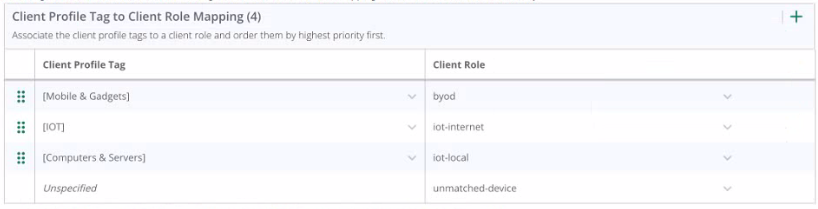
With further default settings assume a new Android phone is connected to the network. Which role will the client be assigned after connecting for the first time?

Show Suggested Answer Hide Answer
Suggested Answer: D

The configuration shown in the third exhibit details a client role mapping that associates different client profile tags with specific client roles. When a new device, such as an Android phone, connects to the network, it will be profiled and assigned a role based on the mappings defined. If the device does not match any predefined profiles, it would be assigned the 'unmatched-device' role. This is under the assumption that default settings are in place and the client does not match the criteria for any of the specific roles like 'byod', 'iot-internet', or 'iot-local'. Therefore, an Android phone connecting for the first time and not matching any specific profile tag would be assigned to the 'unmatched-device' role.


Contribute your Thoughts:

0/2000 characters
Lorrie
2 days ago
But what if the device isn't recognized? Could be D) unmatched-device.
upvoted 0 times
...
Jeanice
7 days ago
I agree, A) byod seems logical. New devices usually get that role.
upvoted 0 times
...
Rebecka
12 days ago
I think the answer is A) byod. It makes sense for a new device.
upvoted 0 times
...
Stefania
18 days ago
I’m with Leigha. A) byod is the most likely outcome.
upvoted 0 times
...
Odette
23 days ago
I lean towards C) lot-local. Could be a special case for IoT devices.
upvoted 0 times
...
Alida
28 days ago
A) byod makes sense. It's a common role for personal devices.
upvoted 0 times
...
Marisha
1 month ago
I feel like B) client will be rejected network access could happen too. Security first!
upvoted 0 times
...
Margarett
1 month ago
I disagree, it might be D) unmatched-device. New devices often don't match.
upvoted 0 times
...
Leigha
1 month ago
I think it's A) byod. Seems logical for a new device.
upvoted 0 times
...
Portia
2 months ago
I thought it would be B) rejected access at first.
upvoted 0 times
...
Nathan
2 months ago
Wait, how can it be byod if it's a new phone? Sounds off.
upvoted 0 times
...
Herminia
2 months ago
Definitely A) byod, that's the default for new devices.
upvoted 0 times
...
Rikki
2 months ago
Nah, I think it's D) unmatched-device.
upvoted 0 times
...
Dean
2 months ago
I'm pretty sure it's A) byod.
upvoted 0 times
...
Yuki
2 months ago
I feel like the default settings might lead to the "client will be rejected network access" if it doesn't fit any role.
upvoted 0 times
...
Harley
4 months ago
I’m a bit confused about the "unmatched-device" option. Does that mean it won't get any access at all?
upvoted 0 times
...
Yolande
4 months ago
I remember a similar question where devices were rejected if they didn't match any roles. Could that apply here too?
upvoted 0 times
...
Jean
4 months ago
I think the new Android phone would be assigned the "byod" role since it's a personal device, but I'm not entirely sure.
upvoted 0 times
...

Save Cancel