
 MENU

Given: A = attenuation in dB, R = real measured value, M = maximum acceptable value. Which formula should be used to calculate the required attenuation factor of EMF shielding material?
Suggested Answer: C
Get Premium CDCS Questions
as Interactive Web-Based Practice Test or PDF
Real Exam Format
Detailed Explanations
Instant Access
Get Your Practice Test
Attenuation is the logarithmic ratio between input and output signals. For power, we use 10 log; for voltage or current, 20 log. Since EMF shielding is measured as field strength (V/m or A/m), power relationship is proportional to the square of field. Thus the correct attenuation calculation for shielding effectiveness is:
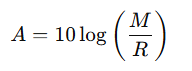
where:
M = maximum permissible field strength
R = measured field strength after shielding
This ensures the shield reduces field intensity to below allowable limits.
9 comments · newest first
RO
Rosamond
3 days ago
A is the correct formula, trust me on this one!
MI
Ming
8 days ago
Wait, how can it be A? That doesn't seem right!
DO
Doug
13 days ago
C seems right to me, but I'm not 100% sure.
AN
Antione
18 days ago
Definitely not B, that one's wrong.
LE
Leatha
24 days ago
I think it's A = 10 log (R/M).
ED
Edda
29 days ago
I feel like option C, A = 10 log (M/R), makes the most sense based on what we learned about attenuation in dB.
HE
Heidy
1 month ago
I’m a bit confused about the difference between using 10 and 20 in the formulas. Does it depend on whether we’re dealing with power or voltage?
NI
Nicolette
1 month ago
I remember practicing a similar question where we had to calculate attenuation, and I think it was A = 10 log (M/R).
BR
Brett
1 month ago
I think the formula we need is related to the ratio of R to M, but I'm not sure if it should be 10 or 20 log.