
New Year Sale 2026! Hurry Up, Grab the Special Discount - Save 25% - Ends In 00:00:00 Coupon code: SAVE25
Welcome to Pass4Success

- Free Preparation Discussions

Eccouncil ECSAv10 Exam - Topic 4 Question 2 Discussion

Actual exam question for Eccouncil's ECSAv10 exam
Question #: 2
Topic #: 4
[All ECSAv10 Questions]

The IP protocol was designed for use on a wide variety of transmission links. Although the maximum length of an IP datagram is 64K, most transmission links enforce a smaller maximum packet length limit, called a MTU.

The value of the MTU depends on the type of the transmission link. The design of IP accommodates MTU differences by allowing routers to fragment IP datagrams as necessary. The receiving station is responsible for reassembling the fragments back into the original full size IP datagram.

IP fragmentation involves breaking a datagram into a number of pieces that can be reassembled later. The IP source, destination, identification, total length, and fragment offset fields in the IP header, are used for IP fragmentation and reassembly.
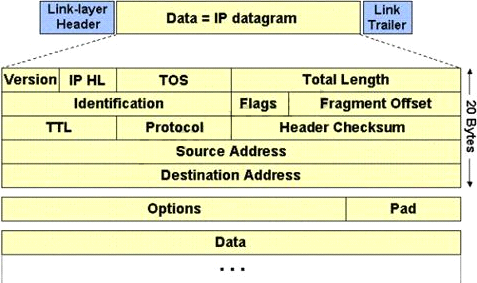
The fragment offset is 13 bits and indicates where a fragment belongs in the original IP datagram. This value is a:

Show Suggested Answer Hide Answer
Suggested Answer: C

Contribute your Thoughts:

0/2000 characters
Krissy
4 months ago
Fragment offset is definitely a multiple of 4 bytes.
upvoted 0 times
...
Naomi
4 months ago
I thought it was multiple of 8 bytes, but I guess not!
upvoted 0 times
...
Alecia
4 months ago
Wait, is the fragment offset really 13 bits? Sounds odd.
upvoted 0 times
...
Valentine
4 months ago
Totally agree, fragmentation is key for IP.
upvoted 0 times
...
Armanda
5 months ago
MTU varies by link type, that's true!
upvoted 0 times
...
Kris
5 months ago
I’m a bit confused about this one. I thought it might be a multiple of eight bytes, but now I'm second-guessing myself after hearing others.
upvoted 0 times
...
Jess
5 months ago
I’m leaning towards the answer being a multiple of four bytes too. I recall that being a common detail in our study materials.
upvoted 0 times
...
Ahmad
5 months ago
I remember practicing a question about IP fragmentation, and I think it mentioned something about the offset being related to byte alignment. Could it be two bytes?
upvoted 0 times
...
Stephaine
5 months ago
I think the fragment offset is a multiple of four bytes, but I'm not completely sure. It seems to make sense with how data is structured.
upvoted 0 times
...
Louisa
5 months ago
Hmm, this one seems straightforward. I'll carefully read through each option and try to identify the one that doesn't match the relational data model.
upvoted 0 times
...
Erick
5 months ago
Okay, I've got a strategy in mind. I think using reserved cloud instances is the way to go, as it allows for more predictable and planned cloud spending.
upvoted 0 times
...
Lisha
5 months ago
I'm pretty sure the answer is C. AWS Direct Connect should give you access to all availability zones within a region, but I'll double-check the details just to be sure.
upvoted 0 times
...
Dylan
5 months ago
Hmm, I'm not sure about this one. I know there are a few different options for reducing the database size, but I'm not totally confident which one is the best approach here. I'll have to think it through carefully.
upvoted 0 times
...
Hyman
5 months ago
Hmm, this is a tricky one. I'm not too familiar with the specifics of R3 Corda, so I'll need to think carefully about the options provided and try to eliminate the ones that don't seem quite right.
upvoted 0 times
...

Save Cancel