
 MENU
MENU
Identify the type of attack, an attacker is attempting on www.example.com website.
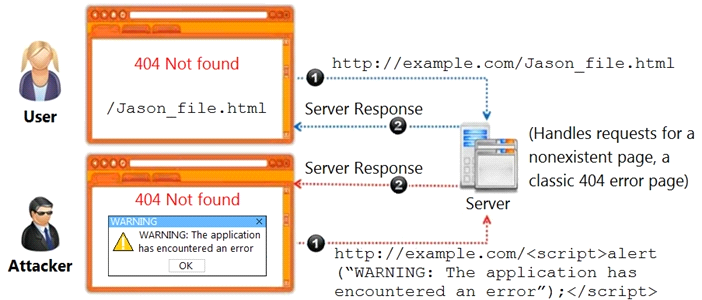
Suggested Answer: A
Get Premium 312-39 Questions
as Interactive Web-Based Practice Test or PDF
Real Exam Format
Detailed Explanations
Instant Access
Get Your Practice Test
14 comments · newest first
GU
Gussie
12 months ago
Wait, are people really still falling for SQL Injection?
SH
Shawnda
12 months ago
Nah, it’s definitely Cross-site Scripting.
SU
Susy
12 months ago
I thought it might be a Denial-of-Service Attack instead.
JA
Jamal
1 year ago
Totally agree, those are super common!
AF
Afton
1 year ago
Looks like a SQL Injection Attack to me.
LE
Leanora
1 year ago
I'm leaning towards a Session Attack, but I don't have a strong grasp on how to differentiate it from the others.
FR
France
1 year ago
This image seems familiar; I feel like it could be a Cross-site Scripting Attack, but I need to double-check my notes.
LE
Lenora
1 year ago
I remember practicing a question about SQL Injection attacks, but I can't recall the specific signs to look for.
HE
Hershel
1 year ago
I think this might be a Denial-of-Service Attack, but I'm not entirely sure. It looks like the site is overwhelmed.
BL
Blondell
1 year ago
Okay, let's see here. The key thing is to identify the mismatch between the two routers. I'll go through the options systematically.
DE
Desmond
1 year ago
Ah, I think I've got it! Line 07 is where the script is iterating through a range of ports, which could be interpreted as a port scan by the IDS.
AR
Arlette
1 year ago
I'm feeling pretty confident about this. Based on my understanding of IPsec VPN setup, the correct answer is option D, "tunnel-group".
RU
Rutha
1 year ago
I'm leaning towards obstructive defect since the FEV1 is 3.1 L, which seems like it could indicate that, but I feel like I need to double-check the percentages.
GA
Gayla
1 year ago
This is a tricky one. I'm not entirely sure about the provider routers knowing the customer network topology, but I think the automatic configuration update for a newly added site PE is a good distinguishing factor. I'll go with that one.