
Free Preparation Discussions
 MENU
MENU
Arcitura Education S90.20 Exam - Topic 1 Question 29 Discussion
Topic #: 1
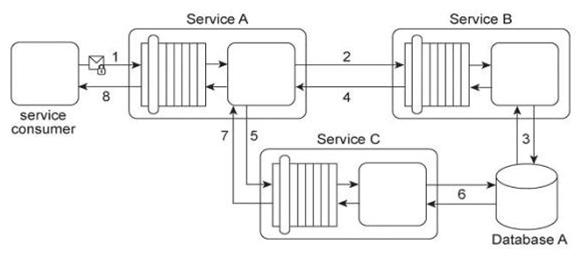
Service A provides a customized report generating capability. Due to infrastructure limitations, the number of service consumers permitted to access Service A concurrently is strictly controlled. Service A validates request messages based on the supplied credentials (1). If the authentication of the request message is successful, Service A sends a message to Service B (2) to retrieve the required data from Database A (3). Service A stores the response from Service B (4) in memory and then issues a request message to Service C (5). Service C retrieves a different set of data from Database A (6) and sends the result back to Service A (7). Service A consolidates the data received from Services B and C and sends the generated report in the response message to the service consumer (8). It has been discovered that attackers have been gaining access to confidential data exchanged between Service A and Service B, and between Service A and its service consumers. What changes can be made to this service composition architecture in order to counter this threat?
Alida
10 months agoLucy
10 months agoAlva
10 months agoHenriette
11 months agoMike
11 months agoDenny
11 months agoArlene
11 months agoReyes
11 months agoVannessa
11 months agoYolando
11 months agoMurray
11 months ago