
Free Preparation Discussions
 MENU
MENU
Arcitura Education C90.03 Exam - Topic 3 Question 19 Discussion
Topic #: 3
Cloud X (owned by Cloud Provider X) provides Physical Server A which hosts Virtual Servers A and B. Virtual Server B hosts Ready-Made Environments A and B. Cloud Service Consumer A uses Virtual Server A as part of an IaaS leasing agreement in which Cloud Consumer A is charged a fixed monthly fee for unlimited access. Cloud Service Consumers B and C use Ready-Made Environments A and B respectively as part of a PaaS leasing agreement based on per-minute usage fees. In both cases, access is monitored via Pay-For-Use Monitor A, which keeps track of log-in and log-out times in order to calculate the usage charges that are billed to Cloud Consumers B and C . Virtual Server A begins generating a series of exceptions. Soon thereafter, Virtual Server B becomes destabilized, resulting in further exceptions being raised in Ready-Made Environments A and B. Cloud Service Consumers B and C receive a series of error messages until both of their connections are dropped Finally, Physical Server A shuts down completely. A subsequent investigation reveals that Virtual Server A was the victim of a security attack performed by a malicious cloud service consumer, the attacker generated increased loads of external communication requests on Virtual Server A and the underlying network, causing Physical Server A (along with Virtual Server B) to eventually shut down.
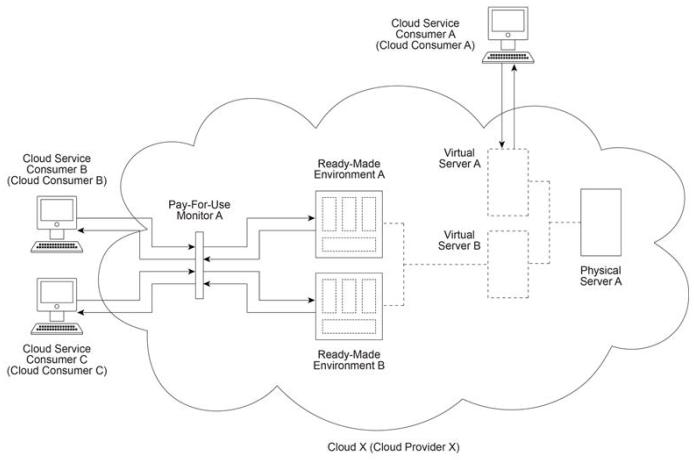
Which of the following statements accurately identifies the type of security threat that corresponds to the described attack - and -provides a solution that can directly mitigate this type of security threat within Cloud X?
Myra
10 months agoCarman
10 months agoWillie
10 months agoThaddeus
11 months agoCharlette
11 months agoJodi
11 months agoXuan
11 months agoBev
11 months agoGlendora
11 months agoHershel
11 months agoHoa
11 months agoStephen
11 months agoRebbecca
11 months agoKristofer
11 months ago