
Free Preparation Discussions
 MENU
MENU
Adobe AD0-E716 Exam Questions
- Topic 1: Demonstrate the ability to extend the database schema/ Describe how to add and configure fields in store settings
- Topic 2: Identify how to access different types of logs/ Demonstrate understanding of branching using CLI
- Topic 3: Demonstrate the ability to import / export data from Adobe Commerce/ Explain how the CRON scheduling system works
- Topic 4: Demonstrate the ability to use the queuing system/ Demonstrate understanding of updating cloud variables using CLI
- Topic 5: Manipulate EAV attributes and attribute sets programmatically/ Demonstrate how to effectively use cache in Adobe Commerce
- Topic 6: Demonstrate the ability to update and create grids and forms/ Demonstrate the ability to use the configuration layer in Adobe Commerce
- Topic 7: Demonstrate knowledge of Adobe Commerce architecture/environment workflow/ Demonstrate understanding of cloud user management and onboarding UI
- Topic 8: Explain the use cases for Git patches and the file level modifications in Composer
- Topic 9: Demonstrate knowledge of how routes work in Adobe Commerce/ Describe how to use patches and recurring set ups to modify the database
- Topic 10: Build, use, and manipulate custom extension attributes/ Describe the capabilities and constraints of dependency injection
- Topic 11: Demonstrate the ability to add and customize shipping methods/ Demonstrate a working knowledge of cloud project files, permission, and structure
- Topic 12: Demonstrate the ability to create new APIs or extend existing APIs/ Demonstrate the ability to manage Indexes and customize price output
Free Adobe AD0-E716 Exam Actual Questions
Note: Premium Questions for AD0-E716 were last updated On Oct. 13, 2026 (see below)
An Adobe Commerce developer has been asked to modify the PageBuilder slider content type to allow a new custom content type (other than slide) to be assigned as a child. The developer has already created the new content type called improved_slide in their module. They now need to create a new view/adminhtml/pagebuilder/content_type/slider. xml file in their module to allow the new content type to be a child of slider content types.
What is the correct xml to accomplish this?
A)

B)
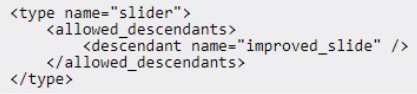
C)

The following XML will allow the new content type to be a child of slider content types:
<type>slider</type>
<children>
<type>improved_slide</type>
</children>
Use code with caution.https://bard.google.com/faq
This XML will tell Magento that the slider content type can have improved_slide content types as children.
An Adobe Commerce Developer is tasked with creating a custom form which submits its data to a frontend controller They have decided to create an action and have implemented the \Magento\Framework\App\Action\HttpPostActioninterface class, but are not seeing the data being persisted in the database, and an error message is being shown on the frontend after submission.
After debugging and ensuring that the data persistence logic is correct, what may be cause and solution to this?
According to the Magento Stack Exchange answer, form key validation is a security feature that prevents CSRF attacks by checking if the form key in the request matches the one generated by Magento. If the developer does not include the form_key in their custom form, the validation will fail and an error will be shown. Therefore, the developer needs to add the form_key to their requests by using <?= $block->getBlockHtml ('formkey') ?> in their template file. Verified Reference: https://magento.stackexchange.com/questions/95171/magento-2-form-validation
An Adobe Commerce developer is about to deploy a critical feature to their Adobe Commerce Cloud (Pro Plan) production. They want to create a snapshot in order to be able to rollback if there is an issue with the feature.
How would they create the snapshot?
The developer can create a snapshot before deploying a critical feature to their Adobe Commerce Cloud (Pro Plan) production by using the dedicated button on Project Web Interface. A snapshot is a backup of an entire environment, including code, data, media files, and configuration settings. A snapshot can be used to restore an environment to a previous state in case of any issues or errors during deployment or testing. The developer can create a snapshot by accessing the Project Web Interface, choosing an environment, and clicking Create Snapshot. Verified Reference: [Magento 2.4 DevDocs]
An Adobe Commerce developer is working on a Magento 2 instance which contains a B2C and a B2B website, each of which contains 3 different store views for English, Welsh, and French language users. The developer is tasked with adding a link between the B2C and B2B websites using a generic link template which is used throughout the sites, but wants these links to display in English regardless of the store view.
The developer creates a custom block for use with this template, before rendering sets the translate locale and begins environment emulation using the following code:

They find that the template text is still being translated into each stores language. Why does this occur?
The startEnvironmentEmulation() method resets the translation locale to the one of the emulated stores, which overrides the locale the developer has set when the order of setLocale() and startEnvironmentEmulation() is used as displayed above.
The correct way to achieve the desired result is to use the emulate() method to temporarily modify the translation locale. The following code shows how to do this:
PHP
$this->_translate->emulate('en_US');
// Render the template
$this->_translate->revert();
This code will set the translation locale to English before rendering the template, and then revert the locale back to the default value after the template has been rendered.
The startEnvironmentEmulation() method is used to emulate a different store view or website. This can be useful for testing purposes, or for developing features that need to work in different environments.
The emulate() method is used to temporarily modify the translation locale. This can be useful for rendering templates in a specific language, or for testing features that need to work in different languages.
A logistics company with an Adobe Commerce extension sends a list of reviewed shipment fees to all its clients every month in a CSV file. The merchant then uploads this CSV file to a "file upload" field in admin configuration of Adobe Commerce.
What are the two requirements to display the "file upload" field and process the actual CSV import? (Choose two.)
A)

B)

C)

D)

To display the 'file upload' field and process the actual CSV import, the following two requirements must be met:
The developer must create a new system configuration setting that specifies the path to the CSV file.
The developer must create a new controller action that handles the file upload and import process.
The system.xml file is used to define system configuration settings. The following XML snippet shows how to define a new system configuration setting for the CSV file path:
XML
<config>
<system>
<config>
<shipment_fees_csv_path>/path/to/csv/file</shipment_fees_csv_path>
</config>
</system>
</config>
The Controller\Adminhtml\ShipmentFees controller class is used to handle the file upload and import process. The following code shows how to create a new controller action that handles the file upload and import process:
PHP
public function uploadAction()
{
$file = $this->getRequest()->getFile('shipment_fees_csv_file');
if ($file->isUploaded()) {
$importer = new ShipmentFeesImporter();
$importer->import($file);
}
return $this->redirect('adminhtml/system_config/edit/section/shipment_fees');
}
- Select Question Types you want
- Set your Desired Pass Percentage
- Allocate Time (Hours : Minutes)
- Create Multiple Practice tests with Limited Questions
- Customer Support
Lisa Harris
15 days agoJohn Cooper
1 month agoKimberly Murphy
2 months agoAndrew Brown
2 months agoAshley White
3 months agoTimothy Sanchez
3 months agoSandra Peterson
4 months agoAmanda Parker
4 months agoFrank Hall
5 months agoGerald Campbell
5 months agoMark Perez
6 months agoDonald King
6 months agoRobert Johnson
5 months agoNathan Jones
5 months agoGerald Green
5 months agoAdam Adams
6 months agoAmalia
6 months agoClaudio
7 months agoGaynell
7 months agoJesus
7 months agoThad
7 months agoJesusita
8 months agoGilberto
8 months agoCarlota
8 months agoRachael
8 months agoShawnda
9 months agoElizabeth
9 months agoElena
9 months agoMelodie
9 months agoMertie
10 months agoMelynda
10 months agoBenton
10 months agoBeckie
10 months agoCarissa
11 months agoElina
11 months agoOneida
11 months agoSabrina
11 months agoMattie
12 months agoDaniela
12 months agoRemona
1 year agoBilly
1 year agoCorrina
1 year agoUla
1 year agoJacquline
1 year agoTricia
1 year agoJina
1 year agoEladia
1 year agoSophia
1 year agoFidelia
1 year agoSharita
1 year agoShawna
1 year agoAntione
1 year agoVi
1 year agoKristel
1 year agoSkye
2 years agoGussie
2 years agoCristen
2 years agoTequila
2 years agoDonette
2 years agoOzell
2 years agoPaulina
2 years agoMarylyn
2 years agoNatalie
2 years agoIsaiah
2 years agoMargarita
2 years agoMicheal
2 years agoBettye
2 years agoBernardine
2 years agoDesiree
2 years agoDick
2 years agoAhmed
2 years agoDelmy
2 years agoLeontine
2 years agoWeldon
2 years agoSerina
2 years agoEdelmira
2 years agoFairy
2 years agoIsaac
2 years agoVirgina
2 years agoLouann
2 years agoDallas
2 years agoVicki
2 years agoSylvia
2 years agoAshanti
2 years agoGeorgeanna
2 years agoStephaine
2 years agoMartha
2 years agoDesire
2 years agoSherman
2 years agoSharika
2 years agoAnnmarie
2 years agoCyndy
2 years agoLarue
2 years agoDoyle
2 years ago