
Deal of The Day! Hurry Up, Grab the Special Discount - Save 25% - Ends In 00:00:00 Coupon code: SAVE25
Welcome to Pass4Success

- Free Preparation Discussions

AACN CCRN-Adult Exam - Topic 2 Question 22 Discussion

A patient is admitted with a femoral shaft fracture and an oblique fracture of three ribs on the right side. The patient suddenly reports shortness of breath. Assessment reveals new-onset headache, central and peripheral cyanosis, and petechiae of the neck and anterior chest wall. Available data are:The nurse should suspect the development of
D) a fat embolus
A) a pulmonary embolus.
B) sepsis.
C) acute pulmonary edema.

AACN CCRN-Adult Exam - Topic 2 Question 22 Discussion

Actual exam question for AACN's CCRN-Adult exam
Question #: 22
Topic #: 2
[All CCRN-Adult Questions]

A patient is admitted with a femoral shaft fracture and an oblique fracture of three ribs on the right side. The patient suddenly reports shortness of breath. Assessment reveals new-onset headache, central and peripheral cyanosis, and petechiae of the neck and anterior chest wall. Available data are:
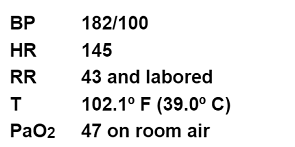
The nurse should suspect the development of

Show Suggested Answer Hide Answer
Suggested Answer: D

The patient's clinical presentation and recent history of femoral shaft and rib fractures are highly suggestive of a fat embolism syndrome (FES). FES typically occurs after long bone fractures and is characterized by sudden onset of respiratory distress, neurological symptoms, and petechial rash, which aligns with the new-onset headache, central and peripheral cyanosis, and petechiae of the neck and anterior chest wall observed in this patient. The fat emboli originate from the bone marrow and enter the bloodstream, traveling to the lungs and other organs, leading to respiratory and systemic symptoms. Reference: =

CCRN (Adult) Certification Review Course Online: Pulmonary Embolism and Fat Embolism.

American Association of Critical-Care Nurses (AACN). (2024). CCRN Exam Handbook. Retrieved from AACN CCRN Exam Handbook

Adult CCRN/CCRN-E/CCRN-K Certification Review Course Online. AACN


Contribute your Thoughts:

0/2000 characters
Noe
5 hours ago
Wait, could it really be a fat embolus? Seems a bit quick.
upvoted 0 times
...
Catherin
5 days ago
Totally agree, the symptoms fit!
upvoted 0 times
...
Alease
11 days ago
Sounds like a fat embolus to me.
upvoted 0 times
...
Gail
16 days ago
I’m torn between fat embolus and pulmonary embolus. Both can cause respiratory distress, but I feel like the rib fractures might point more towards fat embolism.
upvoted 0 times
...
Carmelina
2 months ago
This case feels familiar. I practiced a question about fat embolism before, and I think the headache and petechiae were key indicators.
upvoted 0 times
...
Delpha
2 months ago
I'm not entirely sure, but I think pulmonary embolism could also cause shortness of breath and cyanosis. It’s just that the rib fractures make me lean towards fat embolism.
upvoted 0 times
...
Garry
2 months ago
I remember studying fat embolism syndrome, especially after long bone fractures. The symptoms seem to match, especially the petechiae.
upvoted 0 times
...

Save Cancel